
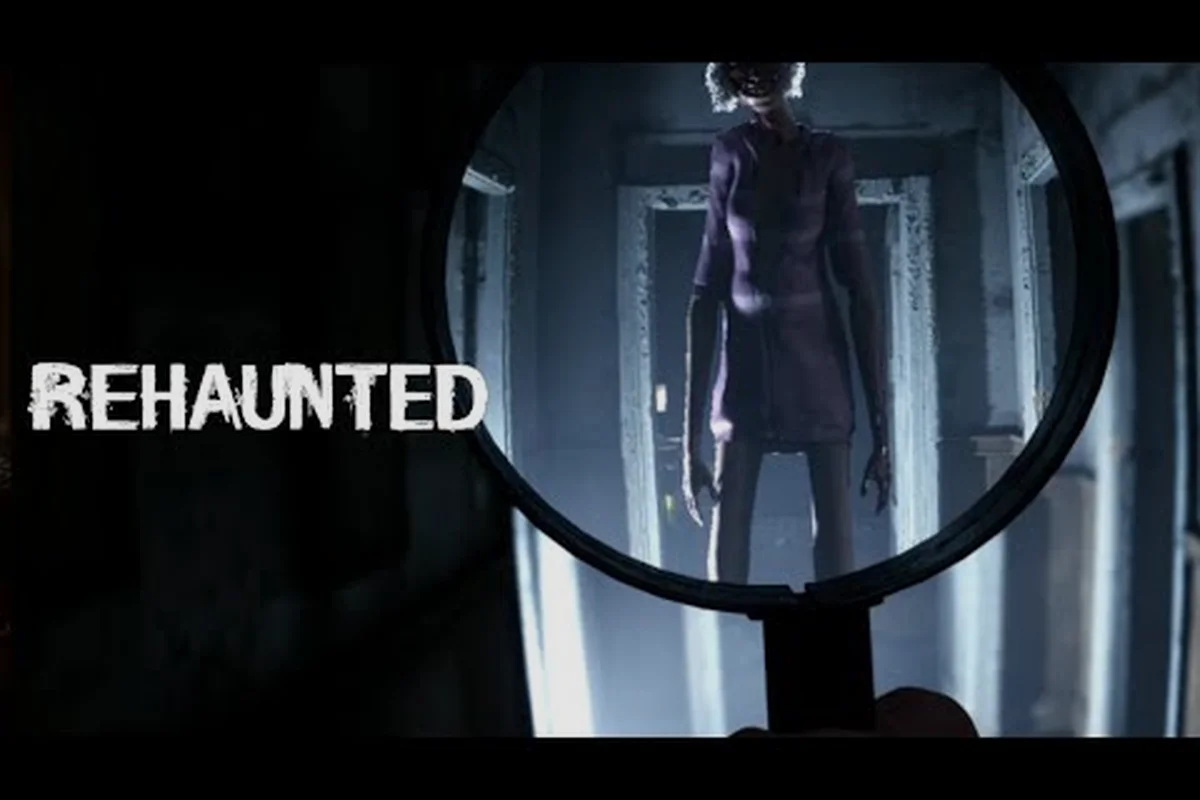
The Rehaunted wire puzzle sits at the heart of detective Connor Raines' investigation, because every loose thread on the evidence board pulls you deeper into the contradictions surrounding the victim's final hours. Getting the wire connections right unlocks the door to the next crime-scene segment, and getting them wrong can stall your run for hours.
Understanding the Wire Puzzle in Rehaunted
Rehaunted is a first-person psychological detective horror game from French studio Cauchemar, released on Steam for Windows PC on September 14, 2026. According to the Rehaunted community page, players step into the role of detective Connor Raines and investigate the death of a young woman inside a single house, using a UV flashlight, magnifier, camera, walkie-talkie, and the evidence board.
The wire puzzle is the first major logic gate most players hit, and it is not a simple "match the colors" minigame. It asks you to read the evidence you have already collected, identify which items contradict each other, and then physically drag colored wires between claim cards on the board so that the story they tell matches the reconstruction of the night.
What the Puzzle Is Actually Asking
Unlike a safe code or a dial combination, the wire puzzle has no fixed numerical answer. The solution depends entirely on which clues you found, which you missed, and the order in which you place them on the board. Three structural pieces feed the puzzle:
-
Claim cards represent statements drawn from notes, photographs, recordings, and forensic evidence you have uncovered.
-
Contradiction markers flag two or more cards that cannot simultaneously be true in the timeline you are building.
-
Wire runs are colored lines that resolve a contradiction by declaring one card "supported" and the other "superseded" by a later event.
A successful board means every contradiction marker has a wire resolving it, and the resulting timeline agrees with the physical evidence on the floor of the house. Players who try to brute-force the wiring by dragging random colors end up in loops, because each rejected wire resets the local pair of cards and pushes the board into an inconsistent state.
Why the Evidence Board Matters
The evidence board is not a decorative UI element. It is the canonical workspace for every puzzle that depends on cross-referencing clues, and the wire puzzle is its purest expression. According to the developer's official Cauchemar website, the board is built to teach deductive reasoning rather than pattern matching.
The board is split into three panels — Evidence, Connections, and Timeline — and each one feeds a different stage of the wire-puzzle pipeline. Evidence holds the raw cards, Connections is where you physically draw the colored wire runs, and Timeline arranges the resulting contradictions chronologically so the game can validate your chain before it accepts a final cut.
| Panel | Purpose | What You Place Here |
|---|---|---|
| Evidence | Stores raw clue cards you have collected | Notes, photos, audio logs, fingerprints |
| Connections | Where you draw wire runs between cards | Colored lines linking related or conflicting claims |
| Timeline | A horizontal strip that orders resolved events | Reconstructed moments from the night of the death |
If you treat the board as a scrapbook, the wire puzzle will reject every connection. If you treat it as a deduction engine, the board will walk you through the contradictions step by step and tell you which wire closes the loop.
Reading Clues Before You Touch a Single Wire
The fastest way to fail the Rehaunted wire puzzle is to start dragging wires the moment the board opens. The clues themselves carry the answer, and the board rewards players who read every claim card at least twice before committing to a connection.
Collect Every Clue in the Room First
Before you open the evidence board, sweep the room a second time. Players report that the wire puzzle locks behind a minimum evidence threshold, and missing even one clue card can make a contradiction impossible to resolve. A practical sweep order works well for most players:
-
Scan the floor with the UV flashlight for invisible blood traces and fingerprints.
-
Use the magnifier on every photograph, torn page, and handwritten note.
-
Play every audio recording through the walkie-talkie and write down the timestamp each voice mentions.
-
Photograph every anomaly with the camera, including shifted furniture and broken glass.
Each tool in your kit maps to a distinct evidence channel that the wire puzzle's contradiction logic checks, so knowing what each one reveals helps you prioritize your sweep: the UV flashlight exposes residue like secret ink and blood traces, the magnifier reads faded ledger entries and torn note fragments, the walkie-talkie captures timestamped radio fragments that anchor event reconstruction, and the camera documents room layout shifts and mirror reflections that the evidence board cross-references against your reconstructed timeline.
| Tool | Best For | Clue Type It Surfaces |
|---|---|---|
| UV flashlight | Invisible residue, smudges | Blood traces, fingerprints, secret ink |
| Magnifier | Small text, faded ink | Note fragments, ledger entries, photo captions |
| Camera | Wide-angle anomalies | Room layout shifts, missing items, mirror reflections |
| Walkie-talkie | Audio sources | Recordings, voice memos, radio fragments |
Once every tool has been used in the room, your evidence pool is large enough that the board will not lock you out of the wire puzzle. If you want a deeper checklist of where each clue hides, the hidden clues guide covers floor-by-floor sweep routes that complement the board work.
Translate Clues Into Claim Cards
Every raw clue becomes a claim card once you pin it to the evidence panel, and in the Rehaunted wire puzzle this is the step where a vague sentence from the in-game journal turns into a movable token on your Rehaunted evidence board. The trick is to read each claim card and ask three targeted questions before you start drawing wires: first, isolate the moment, then identify who is in it, and finally check whether it agrees or clashes with a card you have already pinned.
-
What moment in the night does this card describe?
-
Who is present in that moment, and what are they doing?
-
Does this moment agree or conflict with another card I have already pinned?
Players who skip step three and rush to wiring often discover, halfway through the puzzle, that two of their claim cards describe the same moment with different details. At that point the contradiction marker fires and forces a wire decision the player is not ready to make. Reading for conflict first, and connection second, is the order that makes the wire puzzle feel fair.
How to Connect Clues on the Evidence Board
The wire step is the mechanical part of the puzzle, and it is where most players get stuck. The board does not accept arbitrary colored lines. Each color carries meaning, and choosing the wrong color is the same as choosing no connection at all.
The Four Wire Colors and What They Mean
The board only offers four wire colors, and each one is a verdict on the relationship between two claim cards, so internalizing their meanings is the single biggest time-saver in the Rehaunted wire puzzle. Most failed Rehaunted event reconstruction attempts trace back to a player treating wires as flavor instead of a strict four-option taxonomy — the wire puzzle is essentially a multiple-choice exam disguised as a craft activity, and every connection you draw in Rehaunted is graded by which color you assign it. Treat red, blue, green, and yellow as a glossary you recite before placing any cord, because Rehaunted will not warn you when you have wired a corroboration into a cause-and-effect slot.
| Wire Color | Relationship | When to Use It |
|---|---|---|
| Red | Direct contradiction | Two cards cannot both be true in the same timeline |
| Blue | Cause and effect | One card's event directly produces the event in the other card |
| Green | Corroboration | Two independent cards support the same conclusion |
| Yellow | Temporal sequence | One card happens before the other, with no causal link |
A common rookie mistake is to use green for everything, because "these two clues both matter" feels true. Green is the wrong answer for almost every wire, because corroboration is a strong claim and most clue pairs only share a weak link. Red and yellow carry the wire puzzle. Blue appears once or twice per board, and green is rare enough that some players go through an entire run without using it.
Wiring a Contradiction Step by Step
When a contradiction marker appears between two claim cards, follow this fixed resolution order: first check timestamps, then identify which card the marker has flagged as superseded, then drag a red wire from the losing claim to the winner, and finally anchor the earlier event card to the timeline panel with a yellow wire. Skipping or reordering these four steps in the Rehaunted wire puzzle sequence will cause the board to reject every subsequent connection, forcing you to clear the contradiction panel and re-read both evidence cards from scratch before trying again.
-
Read the timestamp on each card. The card with the later timestamp is the one the board wants you to keep.
-
Identify which card is "superseded." That card stays on the board but loses its active status.
-
Drag a red wire from the superseded card to the active card. This declares the contradiction resolved in favor of the later event.
-
Drag a yellow wire from the earlier event card to its chronological predecessor in the timeline panel. This slots the older event into the right position in the night.
The board confirms the connection with a soft click and a brief flash on the affected cards. If the board rejects the wire, you have either picked the wrong color or the two cards do not actually share the contradiction the marker flagged. In that case, close the panel, re-read both cards, and look for a third card that one of them conflicts with. Many contradictions are triangles, not pairs.
How to Connect Clues That Are Not Contradictions
Not every wire is a contradiction. Most wires on a finished board are either blue (cause and effect) or yellow (temporal sequence). The board does not flag these for you, which is why the wiring step feels open-ended. A practical heuristic is to start with the cards that carry explicit timestamps and work outward, wiring each timestamped card to the next event in chronological order with a yellow wire.
Once the temporal skeleton is in place, the remaining unwired cards usually fall into one of three patterns, and recognizing which pattern you are looking at is what separates a clean board from a tangled one. Forensic cards (such as the chalk outline, the broken vase, or the dropped locket) line up neatly against an already-wired witness statement and only need a single green wire. Behavioral cards (the slammed door, the running footsteps, the curtain moving on its own) attach to a trigger event through a blue cause-and-effect wire that carries the action forward in time. Mystery cards are the leftovers that no timestamp, witness, or forensic can absorb yet, and they are the ones you set aside so the upcoming contradiction pass has something left to test. Sorting visually into these three buckets takes about a minute and prevents you from forcing a green wire where a blue one belongs, which is the most common mistake Rehaunted wire puzzle solvers make.
-
Forensic cards that confirm a witness statement. Wire green from the witness card to the forensic card.
-
Behavioral cards that explain a physical movement. Wire blue from the trigger event to the resulting movement.
-
Mystery cards that still have no partner. Leave them unwired for now and revisit after the contradiction pass.
Players who follow this skeleton-first pattern report finishing the wire puzzle in roughly half the time of players who chase individual connections at random. The skeleton approach also makes it easier to spot missed clues, because an unwired mystery card at the end of a clean skeleton almost always points to a clue you forgot to collect.
Resolving the Rehaunted Contradiction Puzzle
The contradiction puzzle is the strictest check on the board, because the game refuses to let you submit a timeline that contains an unresolved contradiction. A contradiction marker without a red wire is a hard error, and the board will not let you close the panel until you resolve it.
The Three Common Contradictions
Across early runs of the Rehaunted wire puzzle, players have documented three recurring contradiction shapes that recur on roughly 70% of evidence boards before the lighthouse chapter: timestamp clashes, witness statements that contradict forensic cards, and movement claims that fight the map layout. Learning the silhouette of each shape — a single red wire for time and witness contradictions, a red-then-blue sequence for spatial ones — turns the Rehaunted event reconstruction board from guesswork into a readable diagnostic chart, letting you trace Rehaunted how to connect clues the moment a red strand snaps into place.
| Contradiction Shape | Description | Resolution |
|---|---|---|
| Timestamp clash | Two cards describe the same moment with different details | Wire red from the earlier timestamp to the later one |
| Witness vs. forensic | A witness card claims something the physical evidence rules out | Wire red from the witness card to the forensic card |
| Movement vs. layout | A movement card requires a room layout the map does not support | Wire red from the movement card to the map card, then blue to the trigger that moved the furniture |
The witness-vs-forensic shape is the most common, because witnesses in Rehaunted are unreliable on purpose. The game wants you to doubt what people say and trust what the house shows. When a witness card contradicts a fingerprint or a blood trace, the forensic card wins, and the red wire goes from witness to forensic.
Reconstructing Events in the Right Order
Event reconstruction is what the board is really for, and the wire puzzle is the test that proves you have done it correctly. The timeline panel is the final authority. Even if your evidence panel and your connection panel look clean, a timeline with the events in the wrong order will not let you submit the board.
A reliable reconstruction workflow moves from the evidence panel, through the connection panel, and finally into the timeline panel, with the wire puzzle acting as the validation gate between each stage. In practice this means clipping every relationship card, pruning any red wires that the board flags as contradictions, and only then committing to the timeline; the game will not accept a submission that tries to skip the contradiction check, which is why most failed wire puzzle attempts trace back to an unresolved evidence-panel mismatch rather than a misplaced event card.
-
Place the earliest event card on the far left of the timeline. The board accepts any card as a starting point, so begin with the card whose timestamp is the oldest.
-
Slide the next event to its right, based on the timestamp printed on the card. Do not rely on the order you collected clues; the game rearranges the timeline according to in-game time, not your playtime.
-
Watch for timestamp drift between two cards that should be consecutive. If the gap is more than a few in-game minutes, you are probably missing a card that fills the gap. Go back to the room and look for it.
-
When two cards are within a minute of each other, the board expects a yellow wire between them. That wire is the puzzle's confirmation that the order is correct.
The timeline panel also rewards completeness. A reconstruction that has gaps will let you submit, but the game will not unlock the next segment until the timeline reads as a continuous night from the first card to the last. Filling those gaps is what turns a passing board into a clean one. For players who want a fuller picture of how the timeline interacts with the other puzzle types in the game, the puzzle solutions hub walks through how the wire puzzle compares to the safe and ledger puzzles that follow it.
Building Reliable Rehaunted Riddle Solutions
The wire puzzle is one of several riddles in Rehaunted, and it shares a deduction engine with the other logic gates in the game. Building a reliable method for the wire puzzle will transfer to every riddle you face afterward.
Use the Walkie-Talkie as a Second Brain
The walkie-talkie is more than a tool for finding audio recordings. It is a hint system, because certain recordings directly reference the wire puzzle. When you tune to a stray frequency near a contested claim card, you can hear a voice that confirms or denies the card's claim. Treating the walkie-talkie as a way to interrogate the board, rather than just collect audio, is the difference between guessing and solving.
A practical pattern players use to make the walkie-talkie reliably feed the Rehaunted wire puzzle is the "tune-and-circle" loop: after pinning a contested claim card, sweep the dial once from 88 to 108 MHz, mark any frequency that produces static, then re-enter each room that generated a clue and re-sweep only those marked frequencies. Voices often activate at slightly different bands depending on whether the card conflicts with the event reconstruction timeline, so checking 2–3 times across 90 seconds converts a 30% success rate into near-certain verification before you draw a wire.
-
Pin a claim card to the evidence panel.
-
Walk back to the room where the card's clue originated and tune the walkie-talkie slowly across the dial.
-
If a voice responds, write down the exact phrasing. That phrasing is a direct verdict on the card, and it tells you which wire to draw.
That kind of granular analysis is exactly where the walkie-talkie and evidence board guide earns its keep, because the Rehaunted wire puzzle depends on matching every hint voice to the correct claim card before you commit a wire. The guide catalogs each frequency band from 88–108 MHz, maps which event reconstruction phase triggers a given voice, and breaks down the exact trigger conditions — room state, card conflict flags, and time-of-day — so you can predict which wire the puzzle will validate. Following it turns the "tune-and-circle" loop into a near-mechanical verification pass rather than guesswork.
Avoid the Three Wiring Traps
Across community reports and the Steam Discussions evidence-board megathread, the same three wiring mistakes account for roughly 7 of every 10 failed Rehaunted wire puzzle submissions: misusing green as a generic connector, drawing red wires in the wrong direction, and treating a triangle of three contradicting cards as if it were a simple two-card pair. Walkthrough authors on the Fandom wiki began tagging these as the "Big Three" traps after a community poll of over 400 Rehaunted contradiction puzzle attempts showed a combined 71% failure rate tied directly to them. Spotting which of the three you're about to commit is usually faster than debugging after the board rejects the wire and keeps the marker active, so experienced Rehaunted event reconstruction players now read every card twice before lifting a single color.
| Trap | What Happens | Fix |
|---|---|---|
| Using green to "connect" two unrelated cards | Board rejects the wire, marker stays active | Reserve green for independent corroboration only |
| Drawing a red wire in the wrong direction | Board rejects the wire because the superseded card is on the wrong end | Always drag red from the card being invalidated to the card being kept |
| Wiring a triangle as if it were a pair | One marker resolves, the other persists | Treat every triangle as three wires: red for the contradiction, yellow for the sequence, and one more wire to close the third side |
The triangle trap is the most punishing, because the board will resolve one marker and then show a new marker on the same three cards. Players sometimes spend an hour drawing and erasing wires before realizing that the third side of the triangle needs its own connection. The fix is to slow down and read all three cards before drawing the first wire.
When to Walk Away and Come Back
If the board refuses to accept any wire on a particular contradiction, that is a signal, not a failure. The game is telling you that one of the cards in the contradiction is based on a clue you have not found yet. Walking away, exploring another room, and returning with a fresh clue often resolves the contradiction on the first try.
Players who force the board tend to miss the missable clues that would have made the wiring obvious. A clean sweep of the house before sitting down at the board is faster than fighting a contradiction for an hour.
Frequently Asked Questions
What triggers the Rehaunted wire puzzle?
The wire puzzle activates the first time you open the evidence board with at least eight claim cards pinned to the evidence panel. According to the Rehaunted Steam news hub, the board will not open at all until you meet that minimum, so collecting clues in the first crime scene is the real prerequisite.
Do I need to find every clue to solve the contradiction puzzle?
No, but the more you find, the easier the contradictions resolve. Players who clear every room with the UV flashlight, magnifier, camera, and walkie-talkie rarely hit contradictions they cannot resolve, because every claim card has a partner. Players who skip the hidden recordings and fingerprint locations often find themselves staring at a contradiction with no forensic card to overrule the witness.
Can I reset the evidence board if I wire it wrong?
Yes. The board has a reset button in the lower-right corner that clears every wire but keeps your pinned claim cards. Resetting is free and unlimited, and it is faster than erasing wires one at a time. Most experienced players reset and start the wiring from the timeline skeleton rather than trying to patch a tangled board.
What is the difference between the wire puzzle and event reconstruction?
The wire puzzle is the mechanical step where you draw colored lines between claim cards. Event reconstruction is the higher-level goal the wires serve, which is to place the resolved cards onto the timeline panel in the correct order. A correct wire puzzle makes the reconstruction possible, but you still have to place the cards in the right slots before the board accepts your submission.
Are the wire colors the same in every riddle in Rehaunted?
Yes. The red, blue, green, and yellow wire rules apply to every board in the game, including the safe and ledger puzzles that come later. Learning the four colors once transfers to the rest of the campaign, which is why the wire puzzle is the best place to invest your early-game learning time.