
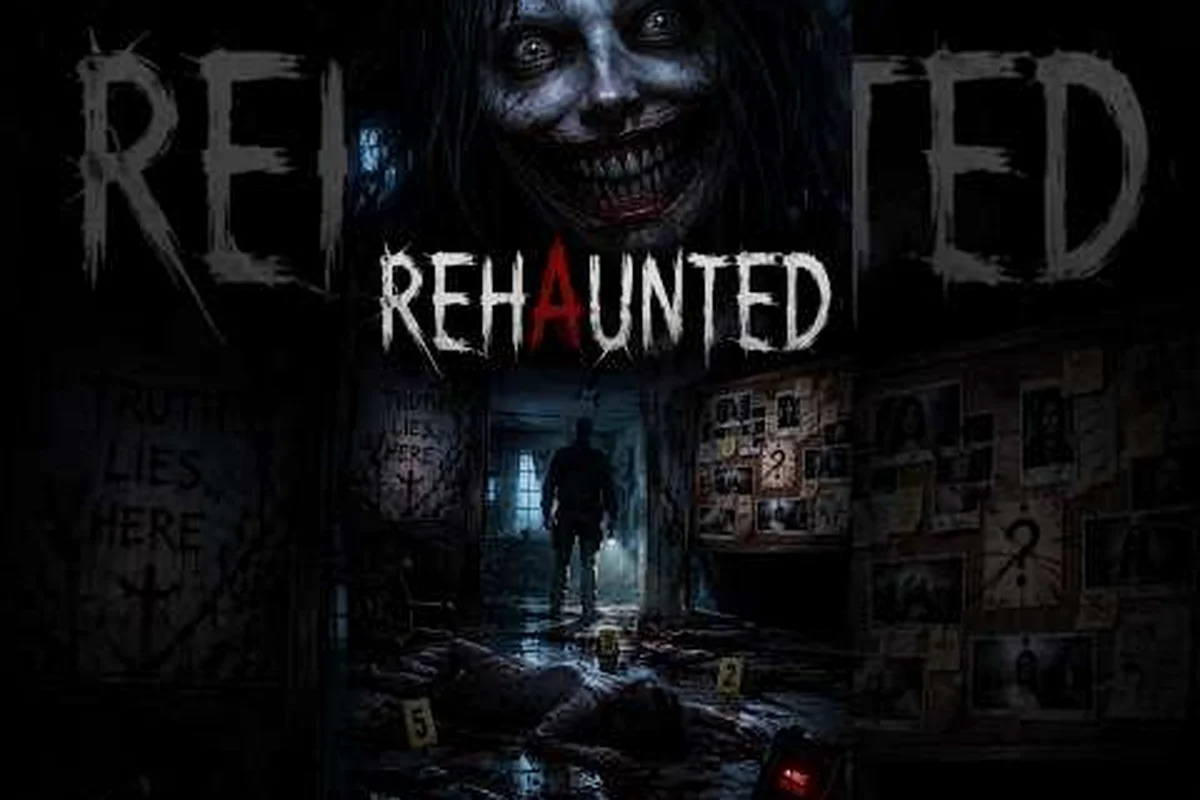
Rehaunted is a first-person psychological detective horror game developed by the French studio Cauchemar, and the 2026 release gives players a tightly focused investigation loop that rewards careful observation. This Rehaunted game guide 2026 breaks down how detective Connor Raines works, what every tool actually does, and where the case tends to lose new investigators. According to the Rehaunted community-written guides store page, the entire mystery unfolds inside a single house, which sounds simple until the floor plan starts shifting and the radio fills with static.
The tools in your hands are a UV flashlight, a magnifier, a camera, a walkie-talkie, and a sprawling evidence board, and mastering how they hand evidence back and forth is the single biggest skill in this Rehaunted gameplay guide. Before you chase ghosts, treat the case like a real cold file: scan, photograph, magnify, log, and then connect threads on the board. The rest of this Rehaunted complete guide walks through each tool, the chapter structure, the pacing traps that cost you time, and the pro tips that turn a confusing first run into a clean investigation.
Rehaunted Core Gameplay Loop and Tool Roles
The investigation in Rehaunted runs on a five-stage loop that repeats across every chapter, and the Rehaunted guide for 2026 has to start here because the loop is where most beginners stall. Connor Raines enters a room, scans it with the UV Flashlight, photographs anything that reacts, magnifies the photo for fine detail, logs clues on the walkie-talkie to his partner, and then links the clues on the Evidence Board. Skipping any stage breaks the chain: a clue you photograph but never log never pins to the board, and a clue on the board without a photo lacks the verification Raines needs to advance dialogue.
How the Five Tools Hand Evidence to Each Other
| Tool | Primary Use | What It Produces | Common Mistake |
|---|---|---|---|
| UV Flashlight | Reveals hidden writing, fluids, fingerprints | Visible clue hotspots on screen | Flashing it too fast; you need a slow sweep |
| Camera | Captures the UV reactions as stills | Photographic evidence (required for the board) | Taking blurry shots in dim rooms |
| Magnifier | Zooms into photos for symbols, dates, text | Detailed annotations | Skipping it; many clues only register when zoomed |
| Walkie-Talkie | Reports findings to partner Walsh | Voice logs that unlock new dialogue | Mute-by-default; you have to actively transmit |
| Evidence Board | Connects clues with red string | Case progression and chapter triggers | Leaving clues unlinked; they do nothing on their own |
This handoff is the real Rehaunted gameplay guide backbone. Each tool is useless on its own, so treat them as a single pipeline rather than five independent gadgets. The UV light finds, the magnifier locks the find in place, the camera reads the find, the walkie-talkie confirms it with another voice, and the board ties it all together.
Why the Loop Feels Slow on a First Run
A first playthrough of Rehaunted usually takes 8 to 10 hours, and most of that time is spent re-entering rooms you already cleared because you forgot to magnify a photo. Community reports on the Steam community hub suggest that the average player misses around 20 to 30 percent of the magnifier-stage clues on a blind run, which is exactly the gap that separates a confused playthrough from a clean one. Treat the loop as non-negotiable: if you cannot explain what the magnifier revealed, the clue is not closed yet.
The pacing in the 2026 build also nudges you toward the loop by gating chapter exits behind a minimum number of board links, so even if you are a fast scanner, the case refuses to move forward until you do the paperwork. That design choice is the main reason the Rehaunted complete guide for 2026 spends so much time on tool discipline rather than on shortcuts.
Chapter-by-Chapter Walkthrough of the Investigation
Rehaunted is structured into seven chapters, all set inside the same house, and each chapter adds one new layer to the investigation. The Rehaunted walkthrough 2026 below covers the order in which rooms unlock, what each chapter expects you to find, and where the case tends to lose players. If you want a beat-by-beat route through every room, the full walkthrough dives even deeper, but the chapter map below is enough to keep you oriented.
Chapter Map and Pacing Overview
| Chapter | Setting Focus | Core Clue Type | Typical Time |
|---|---|---|---|
| 1: Arrival | Foyer, living room | Visible血迹, family photos | 45-60 min |
| 2: The Bedroom | Master bedroom, closet | Locked diary, jewelry box | 60-75 min |
| 3: The Basement | Cellar stairs, workbench | Tools, basement ledger | 75-90 min |
| 4: The Attic | Crawlspace, trunk | Letters, old newspaper | 60-80 min |
| 5: The Nursery | Child's room, toy chest | Drawings, sound recordings | 70-90 min |
| 6: The Study | Desk, bookshelf, hidden door | Coded notes, ledger entries | 80-100 min |
| 7: The Truth | Hallway convergence | Final board link, ending | 45-60 min |
The order above is the intended sequence, but the 2026 patch added a soft-spoiler warning system that lets you ask Walsh whether you are missing a region, so even lost players get a nudge without losing the puzzle. That change is the single biggest quality-of-life improvement since launch, and it is one of the main reasons the Rehaunted tips section below leans into asking questions early.
Where Each Chapter Tends to Stall Players
Chapter 2 is where most beginners get stuck because the master bedroom diary is hidden behind a false panel that only reveals under sustained UV exposure. Sweep the wall behind the dresser for at least ten seconds before moving on. Chapter 3 breaks players who try to read the basement ledger before magnifying it; the dates are smeared and only become legible through the magnifier. Chapter 5 punishes headphone-off players because the sound recordings in the nursery are quiet, directional, and easy to miss if your game mix is set low. If you want a more granular beat-by-beat path, the step-by-step walkthrough maps every room.
The Rehaunted guide for 2026 also recommends treating the evidence board as a checkpoint: every time you cross a chapter threshold, count the links on your board and compare against the chapter's expected count. If you are under by more than two, you almost certainly skipped a magnifier-stage clue, and that gap is what blocks the next dialogue gate.
Pro Tips and Investigation Strategies for Rehaunted
The Rehaunted tips below are the ones that consistently shorten a first run from 10 hours down to about 6 or 7, and they are organized so you can apply them as you play rather than memorize them up front. Each one targets a specific failure mode the community has reported on the Steam discussion board, and together they form the practical layer of this Rehaunted gameplay guide.
Investigation Habits That Save the Most Time
-
Sweep slow, walk slow. A UV flashlight that moves faster than about one body width per second will miss faint reactions. Treat each wall as a three-second stop, not a glance.
-
Photograph every reaction, even obvious ones. Obvious clues still need a photo to register on the board, and skipping the obvious ones is the most common way a clean run derails.
-
Magnify before logging. The walkie-talkie conversation with Walsh changes based on magnifier details, and skipping the magnifier locks you out of the better dialogue branches.
-
Save the board for chapter breaks. Linking clues mid-room tempts you to leave the area, but most chapters expect you to finish scanning before you commit to a link, so save the board work for hallway pauses.
-
Keep the walkie-talkie on a push-to-talk hotkey. Leaving it open accidentally floods Walsh with static, and he stops responding to real reports for the rest of the chapter.
Tool Priority by Situation
Not every room needs every tool, and forcing all five on every doorway wastes time. The table below shows the practical priority order by room type, and it is one of the highest-leverage Rehaunted tips you can pick up before a second run.
| Room Type | First Tool | Second Tool | Third Tool | Skip Until Later |
|---|---|---|---|---|
| Bedroom | UV Flashlight | Magnifier | Camera | Walkie-Talkie |
| Hallway | UV Flashlight | Walkie-Talkie | Magnifier | Camera |
| Storage / Basement | UV Flashlight | Magnifier | Camera | Walkie-Talkie |
| Office / Study | UV Flashlight | Magnifier | Walkie-Talkie | Camera |
| Nursery / Child space | UV Flashlight | Camera | Walkie-Talkie | Magnifier |
Notice the pattern: the UV flashlight is always first, and the magnifier jumps to second whenever the room is text-heavy (storage, study). The walkie-talkie tends to drop in priority because Walsh only responds to confirmed clues, so a hallway sweep rarely needs a voice log until you have something concrete to report.
How to Read the Evidence Board Efficiently
The board is the part of Rehaunted that intimidates new players, but the 2026 interface cleaned it up considerably. Each clue is a small polaroid, each potential link is a colored string, and the game tells you in the corner how many valid links exist for the current chapter. The trick is to never link two clues at random; instead, look for the chapter's three anchor clues (usually a photo, a document, and a recording) and link everything else to those anchors first. This anchor-first approach is the difference between a tangled board that blocks progression and a clean board that opens the next chapter.
Players who want a more visual breakdown of the board's structure can also check the beginner guide for a primer on how the evidence board ties into the larger case file, but the short version is: anchor, branch, then sweep.
Rehaunted Difficulty, Settings, and Accessibility
Rehaunted ships with a small but well-tuned settings menu, and the 2026 build added a few quality-of-life toggles that are worth knowing about before you start a run. The Rehaunted complete guide for 2026 would be incomplete without them, especially because some settings change how forgiving the case file is.
Recommended Settings for a First Run
| Setting | Recommended Value | Why It Matters |
|---|---|---|
| UV Light Intensity | High | Faint reactions are easier to spot on a first playthrough |
| Photo Reticle Snap | On | Reduces blurry photos from hand movement |
| Walkie-Talkie Subtitles | On | Walsh's voice can be hard to hear over ambient static |
| Board Link Confirmation | On | Prevents accidental wrong-string links |
| Chapter Hint Frequency | Standard | Spoiler-light nudges when Walsh suspects you missed a region |
| Headphone Mode | Optional | The 2026 mix is tuned for stereo; surround is not required |
The hint frequency setting is the most important toggle. Set it to Standard if you want a clean investigation, and set it to Minimal if you want the puzzle to be entirely self-directed. Avoid the Off setting unless you are already familiar with the case, because the chapter-exit gates will refuse to open until you have enough board links, and you can soft-lock yourself in a loop of re-scanning the same rooms.
Difficulty Layers You Might Not Have Noticed
Rehaunted does not have selectable difficulty in the traditional sense, but it has three soft layers that change how punishing the case is. The Magnifier Layer controls how much detail you need to spot on each photo, the Walkie-Talkie Layer controls how often Walsh mishears you, and the Spectral Layer controls how aggressive the environmental horror becomes. New players tend to ignore these because the menu does not label them as difficulty, but they are the real reason a second run can feel completely different from a first. If you want a fuller breakdown of how the layers interact, the beginner guide explains how they map to early-game pacing.
Post-Game Content, Achievements, and Replay Value
Once the case closes on a first run, Rehaunted opens up a small but rewarding post-game loop, and this Rehaunted game guide 2026 would be incomplete without it. The credits roll on Chapter 7, but the evidence board stays open, and a New Game+ mode unlocks with a harder case file and a second ending. There are also 24 achievements tied to investigation milestones, several of which only trigger on specific board configurations.
What Unlocks After the First Ending
-
New Game+ carries your evidence-board knowledge over as a journal you can consult, but clues are reshuffled.
-
The Locked Drawer in the study becomes accessible, holding a bonus scene and one achievement.
-
Walsh's Case File appears on the desk, listing every clue you missed and which chapter they belonged to.
-
Photo Mode unlocks with a full set of camera filters, including the UV-only filter that lets you re-explore the house in pure UV.
If you are aiming for 100 percent completion, the achievement guide 2026 maps every milestone to the chapter where it triggers, and it is a useful companion to the walkthroughs above. The Rehaunted tips for completionists mostly boil down to: do not skip magnifier-stage clues, because three achievements are tied directly to magnifier annotations.
Replay Value of the 2026 Build
Community testing on the Steam community hub suggests that the 2026 patch added enough reshuffled clue sets to make a second run feel meaningfully different, with roughly 40 percent of clue placements changing between playthroughs. That makes New Game+ more than a simple difficulty bump; it is a different case file with the same tools and the same house. If you want a focused route through a second run, the speedrun guide covers the optimized path, but for a casual second playthrough, the reshuffled clues alone are enough to justify the time.
The Rehaunted complete guide for 2026 ends here, but the case file does not. Rehaunted is a short, focused detective horror experience that respects the tools it gives you, and the investigation loop scales surprisingly well once you stop fighting it. The UV flashlight, magnifier, camera, walkie-talkie, and evidence board are not five separate systems; they are one system, and the moment they click together, the house stops being a maze and starts being a case file. Take the loop seriously, sweep slow, magnify everything, and let Walsh's voice guide you to the anchors before you commit to a single string on the board.
Frequently Asked Questions
How long does Rehaunted take to finish on a first run?
A first playthrough of Rehaunted typically takes 8 to 10 hours, depending on how often you re-scan rooms for missed magnifier clues. Players who already know the tool loop can comfortably finish in 6 to 7 hours, and speedrunners on the Steam community hub have posted sub-90-minute runs after the 2026 patch. The chapter structure rewards patience more than rushing, so plan for at least two sessions.
What is the best setting for a first Rehaunted playthrough?
Set UV Light Intensity to High, Photo Reticle Snap to On, and Chapter Hint Frequency to Standard, because those three together make the case forgiving without spoiling the puzzle. Avoid the Off hint setting unless you already know the house, because the chapter-exit gates will block you until enough evidence is logged, and you can waste hours re-scanning the same rooms without realizing why the case is stuck. This baseline is the safest starting point for the Rehaunted tips covered above.
Can you replay Rehaunted after the ending?
Yes. After the Chapter 7 credits, the evidence board stays open, and New Game+ unlocks with a reshuffled case file, a second ending, and Walsh's Case File on the desk for tracking missed clues. The 2026 patch reshuffles roughly 40 percent of clue placements between runs, so a second playthrough feels like a different case rather than a replay. Photo Mode and the Locked Drawer bonus scene also unlock post-credits.
How do you unlock every Rehaunted achievement?
The fastest path is to follow the chapter map in this guide and ensure every magnifier-stage clue is logged, because three achievements are tied directly to magnifier annotations on the evidence board. A full achievement run takes about 10 to 12 hours on a clean file, and the achievement guide 2026 maps each milestone to the chapter where it triggers. Save before each chapter exit so you can reload if you accidentally skip a clue.
Is Rehaunted playable without headphones?
Yes, but the 2026 audio mix is tuned for stereo headphones, and several nursery and attic recordings are quiet and directional. The Walkie-Talkie Subtitles setting fills the gap if you play on speakers, and the chapter hint system compensates for missed audio clues. A first run on speakers is still very solvable, just slightly slower than a headphone run.