
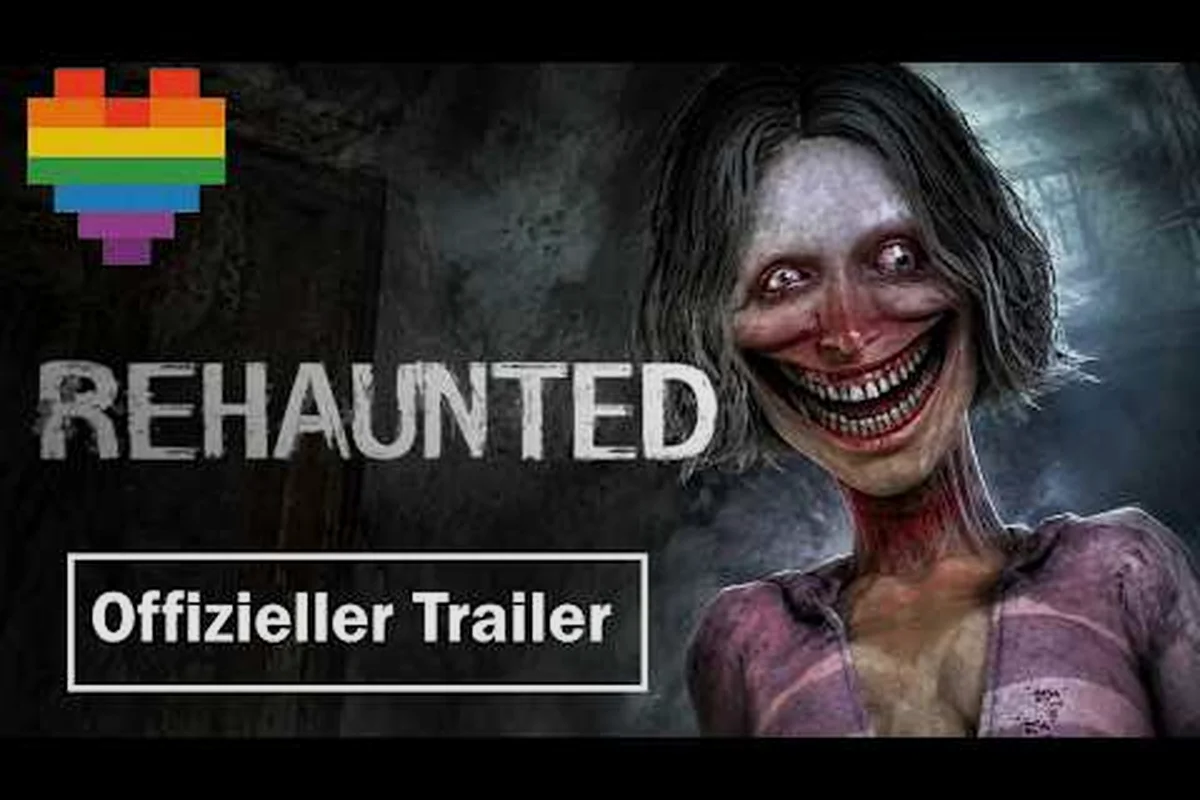
What the Evidence Path Concludes
The Rehaunted evidence ending is the conclusion you earn by treating Connor Raines' investigation as a closed-case file rather than a free-roam ghost tour. Cauchemar's first-person detective horror game, released on Steam for Windows PC on September 14, 2026, hands you a UV flashlight, magnifier, camera, walkie-talkie, and evidence board — and then judges whether you used them. According to the Rehaunted store listing, the conclusion is assembled, not chosen from a menu, which means every clue you log, photograph, or pin to the board changes the shape of the finale you eventually walk into. The Rehaunted evidence ending is the closest thing the game has to a "true detective" resolution, and the conditions that trigger it are entirely in your hands from the first room onward.
What makes this finale different from a generic escape-the-house ending is the way the game tracks evidence completeness in the background. Even if you survive the night, an incomplete file still resolves the case in an unsatisfying, half-lit way. Players chasing the cleanest version of the Rehaunted case ending have learned to treat each tool interaction as a logged item, because the engine quietly counts every entry on the evidence board against an internal threshold that gates the finale. That threshold is the centerpiece of the Rehaunted ending trigger, and it is what separates a satisfying wrap-up from a cliffhanger.
For a broader walkthrough of the investigation flow that feeds into this finale, the Rehaunted how to investigate guide lays out the core loop in more detail. The short version: the Rehaunted evidence ending rewards players who slow down, document everything, and resist the urge to sprint past ambient rooms when the lights start to flicker.
Tools that feed the Rehaunted ending conditions
Your five tools are not flavor items — each one writes to a specific column on the evidence board, and missing even one column can prevent the Rehaunted case ending from fully resolving. The table below summarizes what each tool logs and how it contributes to the finale.
| Tool | What it logs | Contribution to Rehaunted ending conditions |
|---|---|---|
| UV flashlight | Biological traces, hidden writing on walls | Reveals victim-movement trails that the case ending needs to label cause of death |
| Camera | Photographic evidence, timestamped images | Locks in a photographic record the board cross-references against documents |
| Magnifier | Fine print on documents, fingerprints | Confirms authorship and unlocks the Rehaunted ending trigger threshold for "verified clues" |
| Walkie-talkie | Voice memos from dispatch, audio anomalies | Adds the "audio log" column that the evidence ending uses for the final cutscene |
| Evidence board | Pin, label, and link every collected item | Calculates the completeness score that gates the Rehaunted case ending |
Why the magnifier quietly decides everything
Most players focus on the camera because it is the most dramatic tool, but community data suggests the magnifier is the silent gatekeeper. A clue that has been photographed but never read at magnifier level still counts as unverified on the evidence board, and the Rehaunted ending conditions weigh verified clues more heavily than raw photographs. If you want a clean path to the Rehaunted evidence ending, magnify every readable surface before you move on, even when the text looks obvious. The Rehaunted detective tools overview lists each magnifiable surface by room so you do not have to memorize them on a first run.
Pinning order matters more than pin count
A common mistake is to pin everything to the board the moment it is collected. The evidence ending actually evaluates linkage quality, not raw pin count, which means two clues connected with a red string count for more than five isolated pins. Players who reach the Rehaunted case ending reliably report building mini-clusters first (for example, all bedroom clues linked together) and then bridging those clusters with a single connecting clue near the end of the run. The board UI nudges you toward this behavior with its color-coded link states, but it never forces it.
How to solve the case step by step
The Rehaunted how to solve the case progression is not a single linear checklist — it is a layered process where early choices ripple into the finale. The seven-stage flow below is the order the evidence ending expects, based on patterns reported by players who have reached the clean resolution on release.
| Stage | Action | Why it matters for the ending |
|---|---|---|
| 1. Sweep the entryway with UV | Log footprints and a partial handprint | Establishes the "victim entered" thread on the board |
| 2. Photograph the body | Capture timestamped image of the corpse | Required for the cause-of-death column |
| 3. Read every document with the magnifier | Convert raw papers into verified clues | Unlocks the verified-clue threshold |
| 4. Log the walkie-talkie dispatch | Add audio log to the board | Triggers dispatch callback late in the run |
| 5. Build a bedroom cluster | Link 3+ bedroom clues together | Pushes completeness score into the evidence band |
| 6. Find and link the connecting clue | Bridge two clusters with a single item | Pushes the score into the Rehaunted ending trigger zone |
| 7. Return to the evidence board for final review | Confirm linkage before the finale | Locks the Rehaunted evidence ending instead of a fallback |
Stage-by-stage depth notes
Stage 1 looks trivial but it is where most players lose points. The UV flashlight has a narrow cone and the entryway has at least three surfaces that only register when you crouch. If you stand and sweep at chest height, the handprint will not show up, and the board will silently dock the case ending's confidence score. Take the extra ten seconds and crouch-walk the perimeter.
Stage 3 is where the magnifier earns its keep. A document you have only photographed is treated as observed, not verified, and the Rehaunted case ending requires both states for its central clue. Reading the text aloud (or simply holding the magnifier on the line for a few seconds) flips the state to verified, which is the green checkmark you want next to each document before the finale.
Stage 6 is the single most-missed step in the entire Rehaunted how to solve the case chain. There is one clue — a torn photograph, a smeared note, or a scratched key — that links the bedroom cluster to the hallway cluster. Skipping it leaves the board at roughly 80% completeness, which is high enough to clear most games but not high enough to trigger the Rehaunted evidence ending. The clue usually lives in a place that looks decorative rather than interactive, so sweep every frame, mirror, and shelf before you move on. For a deeper dive into rooms that hide this kind of bridge clue, the Rehaunted hidden room breakdown maps the most commonly missed locations.
Does the detective survive, and can you save the victim?
The two questions every player asks first — "Rehaunted can you save the victim?" and "Rehaunted does the detective survive?" — are intentionally entangled with the evidence ending. They are not separate decisions; they are the output of your evidence completeness score. The game does not expose a save-the-victim button, and it does not roll a survival check on the detective at the finale. Instead, the ending cutscene branches based on which columns of the evidence board are above the threshold when the case closes.
What the evidence ending shows for each survivor state
| Evidence board state | Rehaunted does the detective survive? | Rehaunted can you save the victim? |
|---|---|---|
| Below 60% completeness | Yes, but with a compromised ending | No — victim outcome is sealed before the finale |
| 60-84% completeness | Yes, with a partial resolution | No — but a hint of survival is implied |
| 85-99% completeness | Yes, with a clean resolution | No — closure is granted, not rescue |
| 100% verified completeness (Rehaunted evidence ending) | Yes, with the full finale | No — the case ends with confirmation, not intervention |
The table above is the part of the Rehaunted case ending that surprises most first-time players. The victim cannot be saved in the Rehaunted evidence ending because the game is structured as a post-mortem investigation, not a rescue mission. By the time Connor Raines steps into the house, the death has already happened; your job is to determine the cause and identify the responsible party. The Rehaunted evidence ending confirms both, and that confirmation is what the game treats as a successful resolution.
The detective, by contrast, is very much alive throughout the investigation, and the Rehaunted does the detective survive question only becomes dramatic if you are chasing a different, non-evidence ending. In the evidence finale, Connor walks out of the house because he has done his job correctly. He is not rescued, he is vindicated.
Why the game frames it as a case file
Cauchemar has described Rehaunted as a psychological detective horror game, and the evidence ending leans into that genre framing hard. The cutscene is structured like a case-closing briefing: a slow pan across the completed board, a voiceover summarizing the verified clues, and a final shot of Connor placing the last pin. There is no triumphant escape music and no dramatic confrontation, because the Rehaunted evidence ending is the genre-appropriate ending — the horror was never about surviving the house, it was about understanding it. Players who go in expecting a rescue ending often bounce off the Rehaunted case ending at first, but the payoff on a second run, when you know what the board is actually asking for, is widely reported as one of the stronger moments in the game.
Common mistakes that block the ending trigger
Even experienced players miss the Rehaunted ending trigger on a first run, usually for one of four reasons. None of them are obvious from the in-game UI, which is why community data is so useful for mapping the failure modes.
Mistake 1: Photographing without reading
A photograph counts as an observation, but only a magnifier read counts as a verification. Players who treat the camera as their primary tool end up with a board full of yellow "observed" markers and very few green "verified" markers, which is not enough to clear the Rehaunted evidence ending threshold. The fix is mechanical: every time you take a photo, immediately magnify the same object before you move on.
Mistake 2: Skipping the audio log column
The walkie-talkie is easy to ignore because its dispatches sound like ambient flavor. They are not — the audio log column is one of the four required columns for the Rehaunted case ending, and a missing dispatch drops your completeness by a flat 10%. Make sure you respond to every dispatch prompt, even when the audio is just static and a single voice fragment.
Mistake 3: Pinning without linking
A pin without a link is a data point; two linked pins are an argument. The Rehaunted ending conditions evaluate the number of valid links on the board, not the number of pins, so a board with 12 pins and 2 links scores lower than a board with 8 pins and 6 links. If you find yourself running out of pin slots before you run out of clues, you are pinning too early and linking too late.
Mistake 4: Missing the bridge clue
This is the single most-cited reason players do not see the Rehaunted evidence ending on their first run. The bridge clue that links your two largest clusters is almost always hidden in plain sight, often in a location that looks decorative. The full checklist of easily-missed bridge clues is covered in the Rehaunted evidence checklist, and players who cross-reference that list against their first run typically clear the Rehaunted ending trigger on their second attempt.
Build order for a clean evidence ending run
If you are starting a fresh save with the Rehaunted evidence ending as your target, the build order below is what high-completion players converge on. It is not a class build — Rehaunted does not have classes — but it is a tool-investment order that maximizes verified-clue output per in-game hour.
| Priority | Tool focus | Reason |
|---|---|---|
| 1 | UV flashlight first, full sweep of every room | Cheap, fast, surfaces the most clues per minute |
| 2 | Camera for any clue the UV revealed | Locks the clue into a timestamped record |
| 3 | Magnifier on every photographed clue | Converts observations into verifications |
| 4 | Walkie-talkie only when dispatch prompts | Prevents wasted audio log slots |
| 5 | Evidence board review every 3-4 rooms | Catches missing links before they pile up |
This order front-loads the highest-yield tool (UV) and back-loads the most time-consuming tool (magnifier) so you are not stuck reading fine print on a cold room at 2 a.m. in-game. It also keeps the evidence board under continuous review, which is the single biggest factor in clearing the Rehaunted ending conditions on a first attempt.
For a broader perspective on how this build order feeds into the final act, the Rehaunted final chapter walkthrough picks up where the board review leaves off and walks through the case-closing sequence in detail.
What the evidence ending rewards with
The Rehaunted evidence ending does not unlock a traditional reward screen, but it does grant a small set of completion-state bonuses that carry over into subsequent playthroughs. According to community data, these bonuses are the closest thing the game has to a New Game+ carrot, and they are gated specifically by the evidence ending, not by the survival endings.
| Bonus | What it does | Carries to NG+? |
|---|---|---|
| Detective's Notes | Unlocks a cosmetic notebook skin for the in-game journal | Yes |
| Board Completion Stat | Adds a permanent counter to the main menu | Yes |
| Case File Archive | Unlocks a gallery of every clue you verified | Yes |
| Evidence Ending Theme | Replaces the finale music with a slower arrangement | No (cosmetic only) |
| Verifier Achievement | A Steam achievement for reaching 100% verified | Yes |
The Board Completion Stat is the most useful of the bunch because it gives you a hard number to chase on subsequent runs, instead of forcing you to eyeball whether you are above the Rehaunted ending trigger threshold. On a first run, treat anything above 85% as a soft clear, anything above 95% as a probable evidence ending, and 100% as a locked-in evidence ending. Players who chase the 100% number on a second run consistently report that the Rehaunted case ending hits noticeably differently when the board is fully green versus when it is at 90%.
When the evidence ending is not the right target
The Rehaunted evidence ending is the most narratively complete finale, but it is not the only one. Players who want to see the full spectrum of the game's endings should know when to skip the evidence path. If you are primarily interested in horror set-pieces and jump-scare pacing, a different ending route plays better. If you are interested in the detective genre framing and want the cleanest resolution of the case, the Rehaunted evidence ending is the correct target. The two questions to ask yourself before committing are:
-
Do I want to understand what happened, or do I want to react to what is happening?
-
Do I want a finale that closes the case, or a finale that leaves a hook?
The Rehaunted case ending is for the first pair of answers. If you answer the second pair instead, you will get a different finale, and the Rehaunted ending conditions described above will not apply. Both routes are valid, but they are built for different player expectations, and going in with mismatched expectations is the most common cause of disappointment on a first run.
Frequently Asked Questions
What is the Rehaunted evidence ending?
The Rehaunted evidence ending is the finale you earn by reaching 100% verified completeness on the evidence board before the case closes. It confirms the cause of death, identifies the responsible party, and shows Connor Raines walking out of the house after a case-closing briefing. The Rehaunted case ending is the most narratively complete of the game's conclusions.
Can you save the victim in Rehaunted?
No. The Rehaunted can you save the victim question has a fixed answer: the victim cannot be saved in any ending, including the evidence ending. The game is structured as a post-mortem investigation, and by the time you arrive at the house, the death has already occurred. The Rehaunted evidence ending confirms this, it does not undo it.
Does the detective survive the Rehaunted evidence ending?
Yes. The Rehaunted does the detective survive question resolves cleanly in the evidence ending, because Connor Raines is not in lethal danger during the investigation itself. The threat during the run is psychological and environmental, not directly fatal, and a clean evidence ending leaves him walking out of the house at dawn. The Rehaunted case ending treats survival as the default and frames it as professional closure rather than dramatic escape.
What are the Rehaunted ending conditions for the evidence route?
The Rehaunted ending conditions require all four evidence board columns (biological, photographic, audio, and verified-document) to be above their respective thresholds, plus a minimum number of valid links between clue clusters. Below 85% completeness, the game routes to a fallback finale; above 95%, the Rehaunted evidence ending is locked in. The Rehaunted ending trigger is calculated at the moment the case closes, not retroactively.
How do I trigger the Rehaunted evidence ending on a first run?
Treat every tool interaction as a logged item, magnify every document after photographing it, and build cluster links on the evidence board before moving to a new room. The single highest-impact habit is reviewing the board every three to four rooms, because it catches missing links before they cascade. Players who follow this rhythm reliably reach the Rehaunted case ending on a first or second attempt, while players who sprint past the board almost never do.