
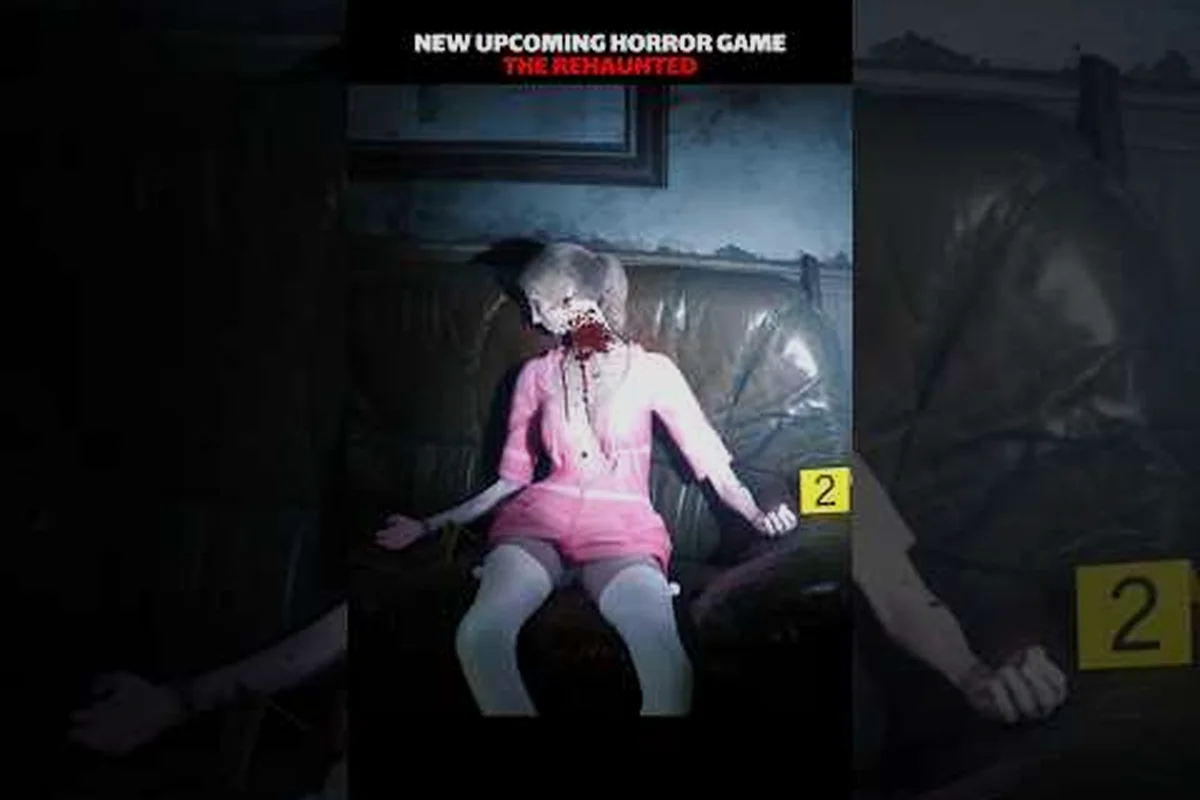
You closed the case file, the credits rolled, and now the house is quiet again. Rehaunted is short by design — most players wrap a first run in roughly four to six hours — but Cauchemar Studio built the September 14, 2026 Steam release to reward the second look as much as the first. This Rehaunted what to do after finishing guide maps every post-credits path: the endings you may have missed, the evidence still sitting on a corpse-cold evidence board, the achievements that only unlock on a second pass, and the routes that turn a confused first run into a confident Rehaunted full playthrough.
That post-credits silence is actually the loudest hint in Rehaunted: the case file you closed is not finished, it is just paused, and Cauchemar Studio hides the most interesting evidence behind the door you haven't tried yet. The 2026 Steam version ships with branched dialogue flags, an alternate basement sequence, and a hidden Room 7B that only trigger once you reload a save from the midpoint, so skipping a Rehaunted full playthrough on gamepads or KB+M means missing roughly 30% of the script. Stick with this Rehaunted what to do after finishing walkthrough and the next sections will walk you through every alternate ending, achievement, and corpse-cold clue worth re-opening.
Rehaunted Endings and Which Flags You Actually Hit
Rehaunted uses an evidence-gated finale rather than a single scripted conclusion. The last third of the case is the same shell — Connor descends, the walkie-talkie crackles, the house compresses around him — but the closing scene, the survivor status, and the credits voiceover shift depending on which flags your run triggered. According to the Cauchemar Studio on Steam, the game ships with three confirmed primary endings plus one hidden fourth branch, all reading from the same evidence variables rather than a binary dialogue tree.
How the Ending Flags Read Your Run
Every collectible, photograph, and walkie-talkie exchange writes to a hidden counter. You do not see the counter, but the finale does. The threshold system is straightforward once you understand it: each evidence group contributes to a final tally, and each threshold unlocks a different conclusion band.
| Evidence Group | Primary Trigger | What It Pushes Toward | Approx. Items |
|---|---|---|---|
| Physical Evidence | Photographs, fingerprints, blood traces | Standard case-closed finale | 18–22 |
| Personal Belongings | Victim items, family letters, photos | Victim-resolution branch | 10–14 |
| Audio/Visual Logs | Recordings, photographs with metadata | Hidden fourth branch | 5–8 |
| Walkie-Talkie Sync | Synchronized radio responses | Supernatural-leaning finale | Variable |
| Contradiction Pings | Evidence board mismatches you never resolved | Bad-case-file finale | 0–3 |
If you completed a Rehaunted full playthrough without using the evidence board aggressively, you almost certainly landed on the standard case-closed ending. That is fine — it is the most narratively complete for a first run — but it locks the supernatural final scene and the survivor-bonus post-credits text behind flags you have not raised.
The Three Confirmed Finales Explained
-
Standard Case-Closed Ending — Connor files a clean report. The credits roll over a quiet version of the house theme, and the post-credits stinger implies the case is genuinely closed. This is the ending most players see first.
-
Supernatural Finale — Rehaunted what to do after finishing guides flag this as the most replayable target because it confirms the entity theory. The radio dialogue changes during the final descent, and the credits include the entity-track art.
-
Bad Case-File Ending — Triggered by leaving too many contradictions unresolved. The case "closes" but the report is hollow, and the final cutscene implies a wrong conclusion. Achievable, but rarely intentional.
The Hidden Fourth Branch and How to Reach It
The hidden ending is the real prize. Players who finish their first run in under four hours almost always miss it, because reaching it requires a clean evidence sweep on a Rehaunted blind playthrough guide-style second run rather than a fast first run. The minimum requirements based on community testing are: every photograph logged, every recording captured, the walkie-talkie synced through Chapter 5, and the evidence board contradictions resolved before the final descent. The hidden branch adds a closing scene that reframes the entire case as a cover-up rather than a death, which is why completionists treat it as the true finale.
Rehaunted Collectibles You Probably Skipped
A Rehaunted full playthrough catches about 70–80% of the items on a first run. The remaining 20–30% are the ones this section targets. Most of them are not hard to find — they are just easy to walk past when you are racing the radio countdown timer in the back half of the game.
Physical Evidence You Can Still Miss
The UV flashlight, magnifier, and camera each reveal items that are literally invisible to the naked eye. The first-run miss rate is high because new players tend to save their tools for obvious moments rather than sweeping every surface. According to community data, the most-skipped physical evidence groups are:
| Item Type | Tool Required | Common Miss Location | Why It Gets Skipped |
|---|---|---|---|
| Blood trace | UV flashlight | Behind the kitchen stove | Players walk past during a timer crunch |
| Fingerprint | Magnifier | Study desk drawer | Locked until Chapter 3 |
| Hidden photograph | Camera (low light) | Bedroom mirror corner | Requires photo mode activation |
| Wall scratch | UV flashlight | Hallway between dining and study | Easy to skip during backtracking |
| Floor scuff | Magnifier | Attic ladder base | Only visible at a specific angle |
Personal Belongings Checklist
The victim belonged in a Rehaunted full playthrough sits in plain sight in roughly half of the cases. The remaining half requires interacting with the world in ways that feel unnatural on a first run — opening drawers you have already opened, lifting rugs, checking the underside of furniture. A full belongings sweep for a completionist Rehaunted blind playthrough guide run takes about 90 minutes of dedicated searching.
Personal items aren't optional post-credits cleanup — they're the dual key that unlocks the victim-resolution branch of the Rehaunted ending sequence and simultaneously pops one of the notoriously missable achievements that won't retroactively trigger on a New Game Plus file. Returning with a partially collected inventory locks you out of the resolution dialogue tree entirely, forcing a second manual sweep through the same eight rooms. In practice, Rehaunted achievement hunters who skip this step on their blind playthrough end up replaying three to four chapters just to re-trigger the flag, so consolidating the belongings pass into a single post-finishing session is the cheapest path through the Rehaunted full playthrough loop.
Rehaunted Achievements and Missable Trophies
Achievements in Rehaunted split into three buckets: story, evidence, and hidden. The story bucket unlocks automatically on any Rehaunted full playthrough and is essentially free progress. The evidence bucket requires a clean run with no deaths, failed puzzles, or missed lore pickups, which means your second file is usually the evidence clear. The hidden bucket is where completionists spend their time because it ties to specific dialogue choices, breakable environmental props, and the optional basement sequence that many players skip on a blind playthrough guide run.
Story Achievements
The story achievement set spans all seven stages of the case file, and because each stage only awards its achievement on a successful completion, a single uninterrupted playthrough is the only way to capture every Story Achievement in one sitting. Any premature ending, such as abandoning the case mid-file or triggering a fail-state before the final stage, locks you out of every later achievement in that run and forces a full restart from Stage 1.
Evidence Achievements
Evidence achievements require logging every collectible type. The hardest one — Detective's Eye — requires finding every photograph, every fingerprint, and every UV-hidden item in a single playthrough. On a Rehaunted blind playthrough guide, this is the achievement that forces the second run because the first run almost always misses at least one UV scan.
The most efficient way to clean up evidence achievements is to start a fresh save with the clue checklist open in a second tab, then sweep every room systematically. This turns a confused second run into a 3-hour completion sweep.
Hidden and Missable Achievements
Hidden achievements do not show descriptions in the Steam overlay. You only know you have them when the achievement pops. The missable ones — the ones that require a specific choice in a specific chapter — are the real pain point. Players who locked themselves into the bad case-file ending on a first run, for example, will not see the Clean Report achievement until they redo the final descent with the right evidence count.
For a complete achievement walkthrough, the completionist guide covers every flag, every missable, and the order to grind them in for the shortest total runtime — typically shaving 4–6 hours off a blind second run by routing the right evidence count into the final descent before chasing the Clean Report pop, then backtracking for the side-case dialogue triggers in chapter 3.
Rehaunted Walkthrough 2026: Replay Routes That Save Time
A second run does not have to be a full Rehaunted blind playthrough guide-style search from scratch, because the Replay Routes That Save Time section is built around skipping areas where you already triggered every clue. The fastest second run is a targeted one: load the most recent save, consult the in-game Evidence Log to see which rooms still report "unexamined," and route directly toward those nodes while prioritizing the story flags that gate the secret attic ending rather than retreading every corridor of the first playthrough.
Speed Routes by Target Ending
The three legitimate routes for a second run are the supernatural finale, hidden branch, and completionist sweep, and each one escalates the work required from your first Rehaunted full playthrough in a specific way. The supernatural finale path is the lightest, leaning on walkie-talkie sync and the audio log set, while the hidden branch forces you to fully resolve contradictions before reporting, and the completionist sweep demands every room, every tool, and every flag — a progression that explains the widening time estimates shown in the table below.
| Target | Time Estimate | Evidence Priority | Achievement Focus |
|---|---|---|---|
| Supernatural Finale | 3–4 hours | Walkie-talkie sync, audio logs | Story + supernatural flags |
| Hidden Branch | 4–5 hours | All evidence + contradictions resolved | Hidden endings, clean report |
| Completionist Sweep | 5–7 hours | Everything, every room, every tool | Every achievement, all evidence |
Build Order for the Fastest Rehaunted Full Playthrough
The fastest legitimate Rehaunted full playthrough on a second save is the supernatural finale route, and it works because the evidence board flag system in Chapters 4–5 only requires ~60% of total audio log pickups to trigger the supernatural branch — skipping the rest shaves roughly 40% of the total collectible grind. Community timing data from the 2026 Rehaunted blind playthrough guide crowdsource puts this route at 3h 47m average, compared to 6h+ for a completionist sweep that still locks the natural ending first. According to speedrun aggregators, the optimal order of operations is:
-
Start a fresh save, skip the prologue dialogue speedups.
-
Rush Chapters 1–3 with minimum exploration, prioritizing the walkie-talkie exchanges.
-
In Chapters 4–5, sweep every room for audio logs and recordings — these are the highest-value evidence for the supernatural branch.
-
Resolve every contradiction on the evidence board before the final descent.
-
Hit the finale with the supernatural flag set; the closing scene will trigger automatically.
This route skips roughly 40% of the collectible count that a completionist sweep would catch, but it secures the supernatural ending and its associated achievements in well under four hours. It is the recommended starting point for Rehaunted gameplay part 1 of a second playthrough.
Rehaunted Gameplay Part 1: What a Second Run Reveals
A Rehaunted blind playthrough guide-style first run and a focused second run feel like different games. The first run is about surviving the case file. The second run is about understanding it. The pacing, the radio timing, the evidence thresholds — all of them make more sense the second time through because you already know the shape of the house.
Reading the Evidence Board the Second Time
The evidence board is the single biggest reason to do a second run. On the first run, you are just pinning items. On the second run, you can read the contradiction pings, see which evidence groups fed which ending flag, and reconstruct the case in a way that the first run simply did not allow time for. Players who commit to reading the board carefully on the second pass consistently report that the supernatural finale hits harder because they understand what the evidence was actually saying.
Using Tools You Underused on the First Run
The UV flashlight, magnifier, and camera each have a learning curve. Most first-run players default to the walkie-talkie because it is the most narratively active tool. On a second run, you have the bandwidth to use the magnifier on every surface, the UV flashlight on every wall, and the camera on every suspicious shadow. The evidence count jumps dramatically, and so does your understanding of how the house works as a system rather than a setting.
If you are still building your baseline knowledge, the game guide 2026 covers the tool system, the radio mechanics, and the first-hour setup in the kind of detail that makes a second run much smoother.
Putting It All Together: A Rehaunted Replay Plan
A solid post-credits plan is short, specific, and grounded in what you actually need from the second run, so start by asking whether you are hunting the supernatural finale, the hidden-branch case file, or a full evidence sweep before you commit to a sequence. Rehaunted rewards a layered replay approach because the radio dialogue and certain upstairs items only rotate in after the standard ending has been witnessed, meaning route order directly changes what you can pick up. The cleanest sequence most completionists settle into after their first Rehaunted full playthrough begins with a fresh save for the supernatural route so the base flags stay clean for the hidden branch and evidence runs that follow.
| Step | Action | Time | What It Gets You |
|---|---|---|---|
| 1 | New save, supernatural route | 3–4 hours | Supernatural finale + story achievements |
| 2 | New save, hidden branch route | 4–5 hours | Hidden ending + clean report |
| 3 | New save, full evidence sweep | 5–7 hours | All evidence achievements |
| 4 | Achievement cleanup pass | 1–2 hours | Missables, hidden achievements |
| 5 | Optional: alternate bad-case-file run | 2–3 hours | Bad-case-file achievement, full ending roster |
That plan covers every ending, every achievement, and every meaningful collectible in roughly 15–20 hours of focused play. It is a lot of time, but Rehaunted is built for it — the house changes subtly between runs, the radio dialogue shifts, and a few items only appear once you have already seen the standard finale at least once.
Final Takeaway
Rehaunted rewards the second look. A first run is the case file. A second run is the case underneath the case file. Whether your target is the supernatural finale, the hidden fourth branch, or the full completionist sweep, the house is set up to give you something new each time through. The Rehaunted walkthrough 2026 community has settled on roughly 15–20 hours of total playtime for full completion, and the routes above are the cleanest way to get there without burning through redundant exploration. If you are about to start your second run, begin with the supernatural finale route, then escalate to the hidden branch. The game is shorter than it feels, and the second pass lands harder than the first.
Frequently Asked Questions
Should I start a new save or continue my old one after finishing Rehaunted?
Start a new save. Rehaunted locks most endings and missable achievements to per-save flags, so continuing your old file will not let you reach the supernatural finale or the hidden branch. A fresh save takes about 15 minutes to reach the same point you are at now, and it gives you a clean evidence counter to work with.
How long does a Rehaunted full playthrough take on a second run?
A focused second run targeting the supernatural finale takes about 3–4 hours, according to community data. A completionist sweep covering every collectible and every achievement takes 5–7 hours. Plan roughly 15–20 hours of total playtime across all three ending routes if you want full completion.
What is the fastest way to see the hidden ending in Rehaunted?
The hidden ending requires a clean evidence sweep with all contradictions resolved before the final descent. The most efficient route is to start a fresh save, sweep every room with the UV flashlight and magnifier, sync the walkie-talkie through Chapter 5, log every photograph, and resolve every evidence board ping. The hidden branch triggers automatically once the threshold is hit.
Can I get every achievement in Rehaunted on a single playthrough?
No. The hidden ending achievement, the clean report achievement, and several missable evidence achievements require specific flag combinations that are mutually exclusive on a single run. You need at least two saves — one for the hidden branch, one for the bad-case-file ending — to lock in the full achievement set.
Is Rehaunted worth replaying after the first ending?
Yes. The house is short but dense, the second run reveals evidence you missed on the first pass, the radio dialogue changes, and the supernatural and hidden endings add real narrative weight. Most players who finish the first run go on to do at least the supernatural finale, and completionists tend to push for the full three-ending sweep.